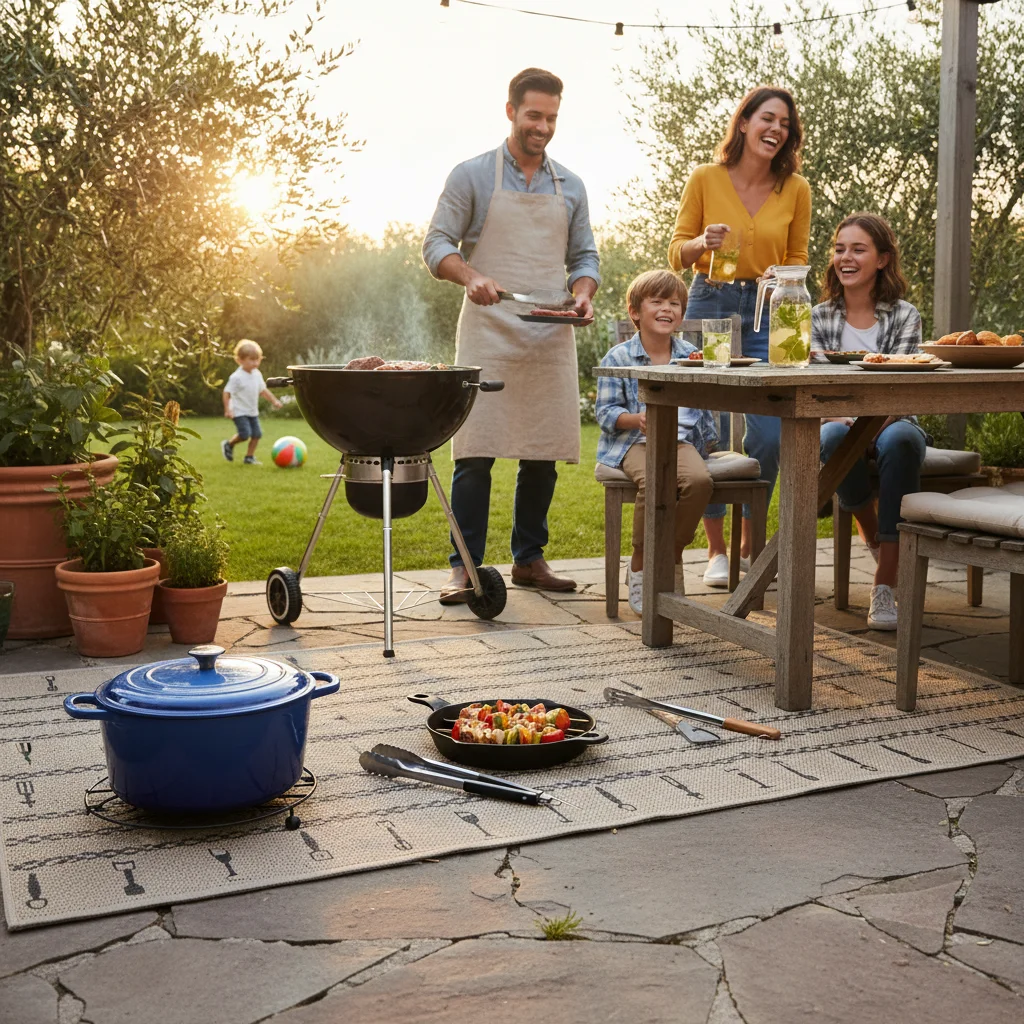
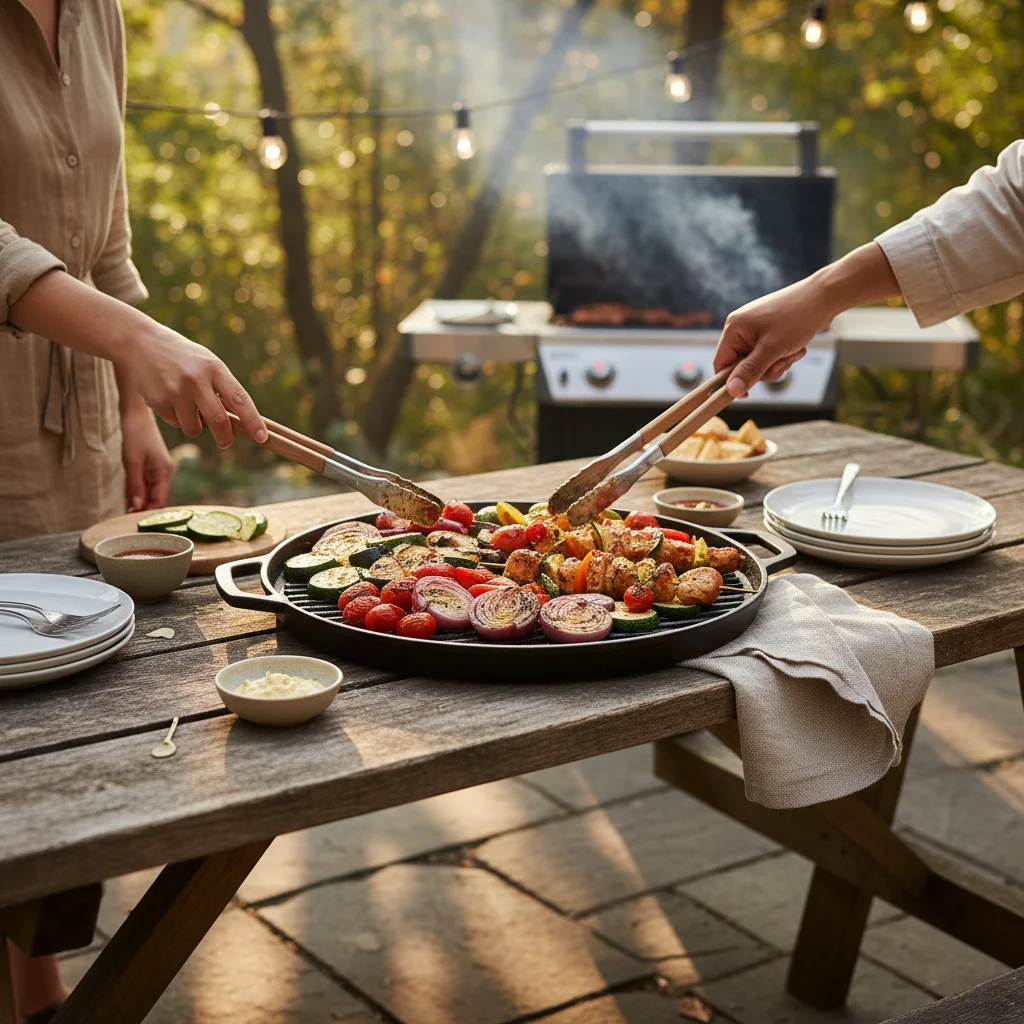
Investing in high-quality forged bbq tools is more than just a purchase for the backyard; it is an investment in culinary precision and lifelong durability. Unlike stamped metal alternatives, forged tools are crafted through a process of intense heat and pressure, resulting in a grain structure that provides unmatched strength and balance. For the serious grill master, these tools represent the bridge between amateur grilling and professional-grade outdoor cooking.
Globally, the trend toward outdoor living and "slow food" has revitalized the demand for artisanal metalwork. As consumers move away from disposable culture, the appeal of forged bbq tools lies in their sustainability—they are designed to last generations rather than seasons. This shift is reflected in the growing intersection of traditional blacksmithing techniques and modern ergonomic design, ensuring that each tool is as comfortable in the hand as it is effective over the coals.
Understanding the nuances of forging helps users appreciate why these tools maintain their edge and shape under extreme thermal stress. From the heavy-duty tongs that grip a thick brisket to the precision spatulas used for delicate seafood, the structural integrity of forged steel prevents bending and warping. By choosing professional-grade equipment, enthusiasts can achieve consistent results, ensuring that every sear and flip is executed with confidence and ease.
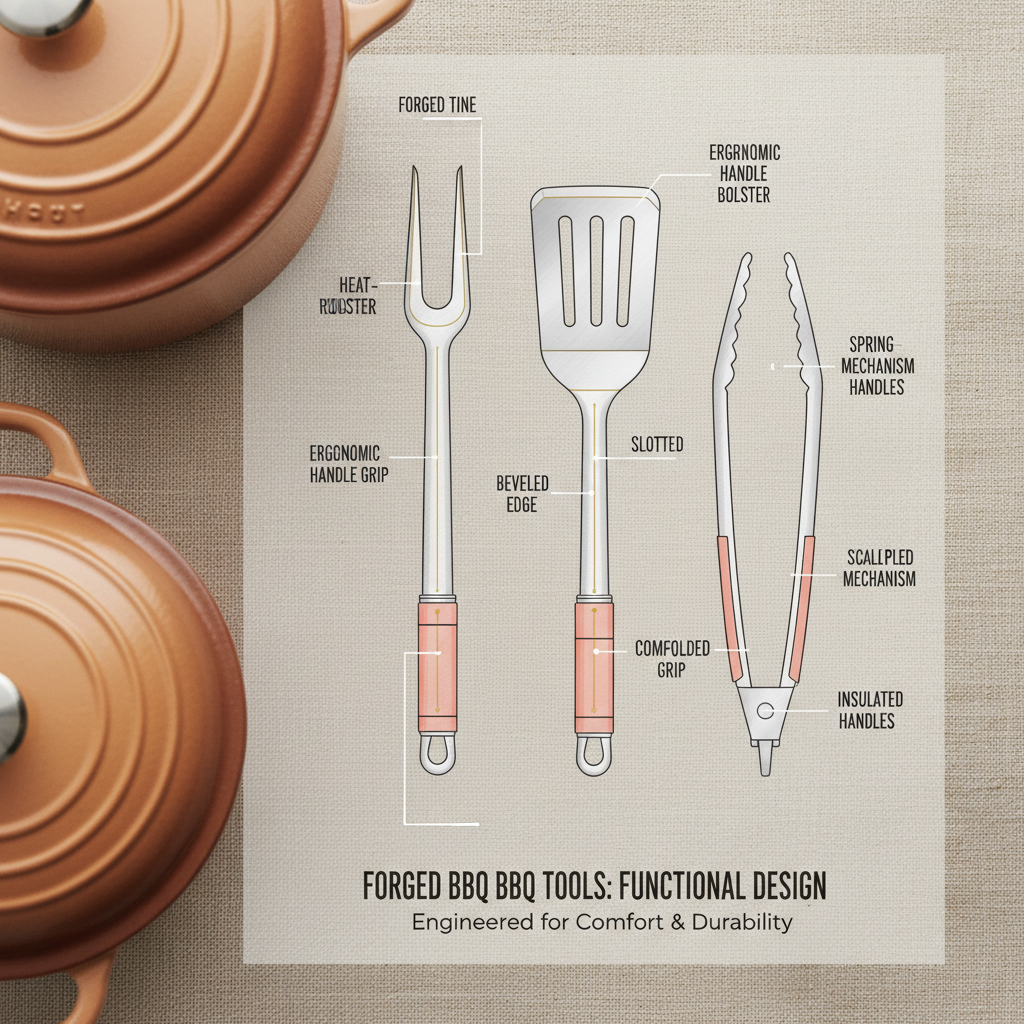
The Engineering Behind Forged BBQ Tools
The forging process for forged bbq tools involves heating metal to a malleable temperature and then shaping it using compressive forces. This fundamentally differs from casting or stamping, as forging aligns the internal grain flow of the metal to the shape of the tool. This structural alignment ensures that the tools can withstand the repetitive stress of flipping heavy meats and scraping hot grates without developing fatigue cracks.
Furthermore, the precision of modern forging allows for a seamless transition between the head of the tool and the handle. This eliminates weak points where welds might typically fail in cheaper alternatives. By integrating the entire tool into a single, cohesive piece of high-carbon steel, manufacturers can offer a product that balances weight perfectly, reducing wrist strain during long grilling sessions.
Global Market Trends in Professional Grilling Gear
Across North America and Europe, there is a documented surge in the "premiumization" of outdoor cooking. Data from consumer behavior reports suggests that enthusiasts are increasingly shifting toward professional-grade equipment that mirrors the quality found in Michelin-star kitchens. This trend is driven by a desire for authenticity and a rejection of the "throwaway" economy, positioning forged bbq tools as heirloom pieces rather than mere utilities.
In Asia and South America, the growth of specialized BBQ cultures—such as Korean BBQ and Argentinian Asado—has pushed the demand for tools that can handle specific heat intensities and meat cuts. The requirement for tools that do not warp under the extreme heat of charcoal bellows has made forging the gold standard. ISO standards for metallurgy have further refined the quality of these tools, ensuring consistent carbon content and heat treatment across global shipments.
The primary challenge addressed by this market shift is the failure rate of mass-produced aluminum or thin stainless steel tools. These often bend when handling larger cuts of meat or corrode quickly in salty coastal environments. By transitioning to high-grade forged steel, the industry provides a solution that offers both the thermal resistance needed for high-heat searing and the corrosion resistance required for longevity.
Core Components of High-Performance Forged Steel
The primary strength of forged bbq tools lies in the alloy composition, typically utilizing high-carbon stainless steel. This combination ensures that the tools maintain a sharp edge (for knives or scrapers) while remaining resistant to the oxidation caused by smoke, fat, and moisture.
Crucial to the performance of these tools is the heat-treatment process. By precisely controlling the quenching and tempering phases, the steel achieves an optimal balance between hardness and toughness. This prevents the tool from being too brittle (which would lead to snapping) or too soft (which would lead to bending) under the pressure of heavy-duty grilling.
Ergonomics also play a vital role in the design of these professional tools. Forged handles are often contoured to fit the natural grip of the hand, distributing the weight of the tool so that the center of gravity is optimized. This attention to detail reduces fatigue and increases safety when maneuvering hot food over open flames.
Comparative Performance and Durability Analysis
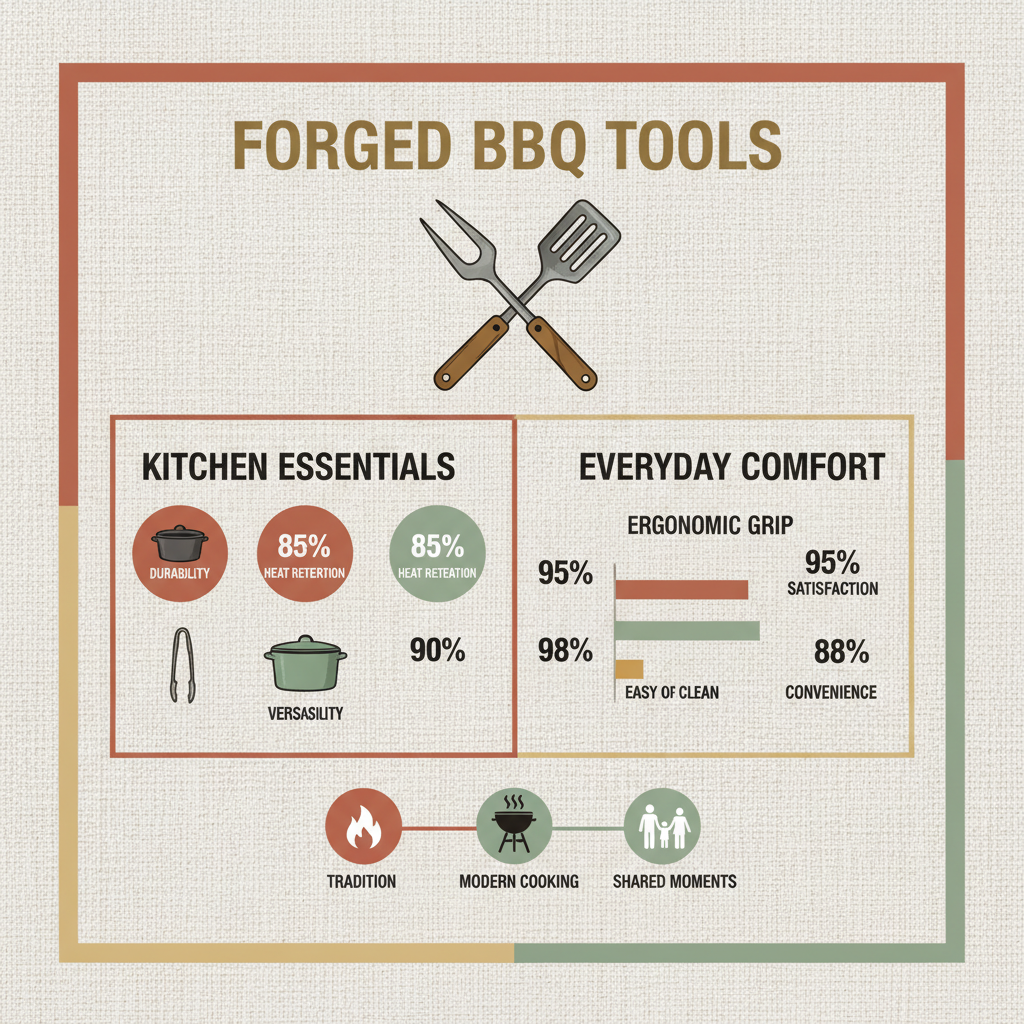
When comparing forged bbq tools to stamped or cast alternatives, the difference in tensile strength is stark. Stamped tools are essentially cut from a flat sheet of metal, leaving them prone to bending at the neck. Forged tools, however, possess a dense molecular structure that resists deformation even when applying significant leverage to a stubborn piece of grilled meat.
Beyond strength, the thermal conductivity of forged steel is more predictable, meaning the handles stay cooler for longer when designed with proper heat-break technology. This combination of physical resilience and user safety makes forging the only viable choice for high-volume commercial environments where tools are used for 12+ hours a day.
Performance Comparison of Forged BBQ Tools vs Alternatives
Practical Applications in Commercial and Home Kitchens
In professional steakhouse environments, forged bbq tools are indispensable. Chefs rely on the extreme rigidity of forged tongs to rotate heavy cuts of Wagyu or prime rib without the tool flexing. The ability to maintain a precise grip ensures that the meat isn't punctured or torn, preserving the integrity of the crust and the juices within.
For the home enthusiast, these tools elevate the experience of outdoor cooking from a chore to a craft. Whether it's managing a low-and-slow brisket smoke or a high-heat sear on a cast-iron griddle, the reliability of forged steel means the user can focus on the food rather than worrying about their equipment failing. They are particularly effective in regions with extreme humidity, where lower-quality tools rust almost overnight.
Long-Term Value and Sustainability Benefits
The value proposition of forged bbq tools is rooted in the concept of "cost per use." While the initial investment is higher than that of mass-market tools, the lifespan is exponentially longer. A forged set can easily last 20 to 30 years with minimal care, whereas stamped tools are often replaced every two to three seasons.
From a sustainability perspective, choosing forged equipment significantly reduces landfill waste. The metallurgy involved allows these tools to be recycled more efficiently at the end of their extremely long life cycle. Moreover, by reducing the frequency of replacement, consumers lower the carbon footprint associated with the manufacturing and shipping of cheap, disposable alternatives.
There is also an emotional value associated with owning professional gear. The weight, the feel of the polished steel, and the knowledge of the craftsmanship instill a sense of pride and confidence. This psychological boost often leads to more experimentation in the kitchen and a deeper commitment to mastering the art of fire-based cooking.
Future Innovations in BBQ Tool Metallurgy
The future of forged bbq tools is being shaped by advancements in powder metallurgy and nano-coatings. These innovations allow for even finer control over the steel's grain structure, potentially creating tools that are lighter than traditional forged steel but possess twice the hardness. This would solve the only common complaint about forged tools: their relative weight.
We are also seeing a trend toward "hybrid forging," where different alloys are fused together. For example, a tool might feature a high-carbon forged head for strength and a lightweight titanium-alloy handle for balance. This marriage of materials ensures that the tool performs optimally at the point of contact with the food while remaining comfortable for the user.
Sustainability is also driving the adoption of green hydrogen in the forging process. By replacing traditional coke and coal with hydrogen-powered furnaces, the production of forged tools is becoming carbon-neutral. This ensures that the gear used to cook sustainable, organic meats is created through a similarly eco-friendly process.
Technical Specifications and Material Analysis of Forged Tooling
|
Material Grade
|
Hardness (HRC)
|
Corrosion Resistance
|
Lifespan Estimate
|
| High-Carbon Forged Steel |
56-58 |
High |
25+ Years |
| Standard Stainless Forged |
52-54 |
Very High |
20+ Years |
| Stamped 430 Stainless |
40-42 |
Medium |
2-5 Years |
| Cast Aluminum Alloy |
30-35 |
High |
5-10 Years |
| Titanium-Forged Hybrid |
60+ |
Extreme |
Lifetime |
| Basic Carbon Steel |
50-52 |
Low |
10-15 Years |
FAQS
Forged tools are shaped using compressive force while the metal is hot, which aligns the grain of the steel to the tool's shape. Stamped tools are simply punched out of a cold sheet of metal. This makes forged tools significantly stronger, more resistant to bending, and more durable over decades of use compared to stamped versions.
Not necessarily. High-carbon stainless forged tools are very low-maintenance. However, if you use a non-stainless forged carbon steel tool, you will need to "season" it with oil to prevent rust, similar to a cast-iron skillet. For most users, the forged stainless options provide a professional experience with the same ease of cleaning as standard tools.
The price reflects the labor-intensive process and higher material quality. Forging requires specialized machinery, high energy for heating, and skilled craftsmanship to ensure proper heat treatment and balance. While the upfront cost is higher, the "cost per year" is actually lower because you won't need to replace them every few seasons.
Yes, absolutely. One of the primary reasons professional chefs use forged tools is their thermal stability. They are designed to withstand extreme temperature fluctuations without warping, twisting, or losing their structural integrity, making them ideal for searing steaks or managing intense charcoal fires.
They generally have more "heft" than aluminum or thin steel tools, but this is actually a benefit. The weight is carefully distributed to provide better balance, which allows for more control when flipping heavy meats. A quality forged tool feels substantial and balanced, not clumsy.
Look for a seamless transition between the handle and the head. Stamped tools often have a visible weld or a folded seam. Forged tools have a smooth, organic flow of metal. Additionally, check for a weight balance; forged tools feel denser and more centered than hollow or stamped alternatives.
Conclusion
In summary, forged bbq tools represent the pinnacle of outdoor cooking equipment, combining ancient blacksmithing wisdom with modern metallurgical science. By focusing on grain alignment, precise heat treatment, and ergonomic balance, these tools solve the common problems of bending, warping, and premature wear found in mass-market alternatives. Whether for a professional chef or a weekend enthusiast, the transition to forged steel ensures consistency, safety, and a level of durability that transforms grilling into a lifelong passion.
Looking forward, the industry is moving toward even more sustainable production methods and hybrid materials that will further enhance performance. We recommend that any serious griller move away from disposable gear and invest in a high-quality forged set that will serve them—and perhaps their children—for years to come. For the best in professional-grade outdoor equipment, visit our website: www.kingwaycookwares.com